About The Consciousness Library
Whether you're a clinician, a researcher, or a curious explorer, The Consciousness Library gives you direct access to the research, and a community making sense of it together. We aggregate the world's scholarship on psychedelics, meditation, dreaming, and consciousness, pull out each study's key facts, show what the evidence says topic by topic, and keep all of it free to read.
We are a non-profit using technology to make engagement with this research equitable and user-friendly. The Consciousness Library is a project of Mindscape Collective, a registered 501(c)(3) nonprofit, so donations are tax-deductible in the United States. The longer aim: advance knowledge and build community around consciousness exploration, its therapeutic and cultural value, and cooperation for a better future.
50,409 papers 3,811 clinical trials 270 syntheses 158 monthly recaps 37 topics
Our values
- Community connected
- Designed with community input, always prioritizing engagement, feedback, and support.
- Curious and evolving
- Promoting exploration with continued growth and iteration, in sync with this dynamic field.
- Equitable and transparent
- Accessibility for everyone, with honest and open business and technology processes.
- Technology driven
- Comprehensive data sources and modern web technology to democratize access to research.
The team
The minds behind The Consciousness Library
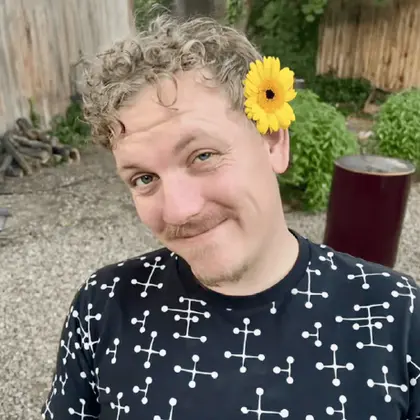
Mike Elliott
Founder & Executive Director
Mike has a long history of consciousness exploration and study through dreams, meditation, psychedelics, and other altered states. He has a BA in Psychology and has been an engineer, organizational leader, consultant, and instructor in the software industry for over 15 years.
Most recently, Mike has worked as a Director of Engineering at Dutchie (opens in new tab), the industry-leading software platform for cannabis dispensary operations, and ezCater (opens in new tab), the largest catering technology company. In 2026, he finished his master's in Psychedelics and Consciousness Studies (opens in new tab) at the University of Ottawa. He spends his time outdoors, coding, gaming, learning, and exploring the mind and the world.
See his personal website at elliotec.com (opens in new tab)
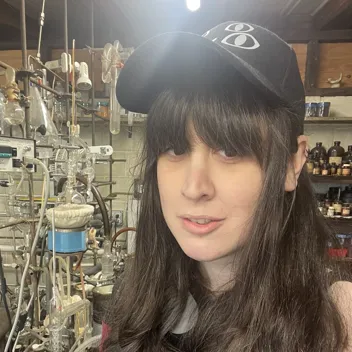
Josie Kins
Board Member & Director of Product Design
Josie is a prominent researcher, writer, community leader, YouTuber, and content creator within the online psychedelic subculture. She currently works as the Phenomenologist & AI Performance Specialist at Mindstate Design Labs (opens in new tab).
Josie founded PsychonautWiki (opens in new tab) and The Subjective Effect Index (opens in new tab), growing these sites into leading sources of formal documentation, phenomenology, classification, and taxonomy of altered states of consciousness, with over a million monthly visitors.
See her personal website at josiekins.xyz (opens in new tab)
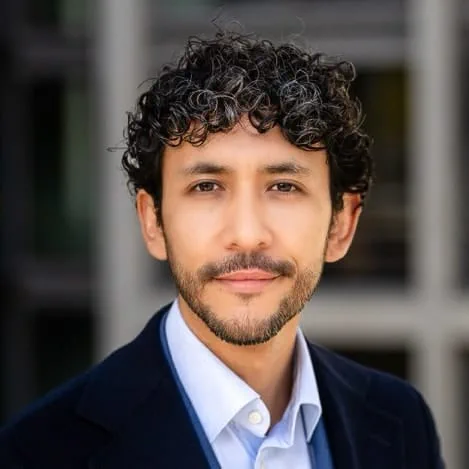
Sergio Pérez Rozal
Scientific Advisor
Sergio is Chair of the Board of Directors at Psychedelia Stiftung (opens in new tab) and an Adjunct Professor at the University of Ottawa in the Master's program for Psychedelics and Consciousness (opens in new tab).
He is a specialist in Anesthesiology, Emergency and Intensive Care Medicine with many years of experience in acute care and pain therapy, and serves as Head of the Emergency Department and Senior Physician at the Clinic for Acute and Emergency Medicine at the University Hospital Neuruppin (UKRB).
As co-founder of the first clinic for psychedelic medicine in Germany, he is a leading expert in psychedelic therapy and its integration into modern medical and psychotherapeutic concepts. He gives international lectures, conducts workshops, and acts as a consultant for pharmaceutical companies, clinic developments, and scientific projects.
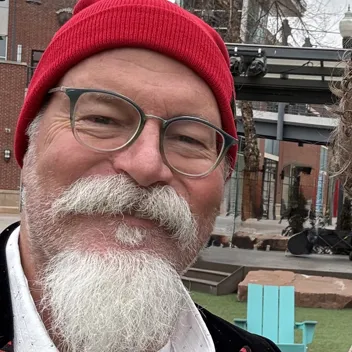
Steve Urquhart
Board Member
With his wife Sara, Steve founded The Divine Assembly, a DIY religion of spiritual autonomy. To promote safe and sincere worship, Steve has taught thousands of people to grow their own sacred mushrooms. His law practice focuses on entheogenic religions. He served in the Utah Legislature for 16 years, and taught health policy at the University of Utah medical school for 5 years.
See TDA's website at thedivineassembly.org (opens in new tab)
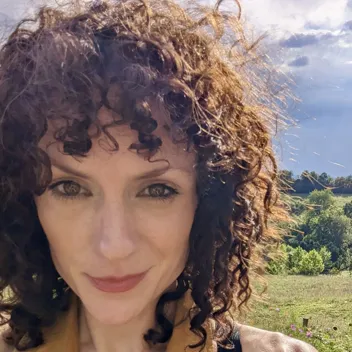
Ru Alyce
Board Member
Ru is a seasoned business builder, strategist and producer with 15+ years of experience working at the intersection of innovation, community, and commerce. She specializes in crafting immersive experiences that integrate physical and digital elements. She is deeply passionate about the transformative power of collective experiences, within the realms of art and alternative healing.
Currently, she is focused on creating physical and digital spaces that foster healing through self exploration and community connection, utilizing a variety of ancient and emerging wellness technologies. A few of her past clients include: City of Hope Medical Center, The Shed Cultural Center, Universal Parks & Resorts, Netflix, Apple, Google, and The Empire State Realty Trust.
See her LinkedIn (opens in new tab) here
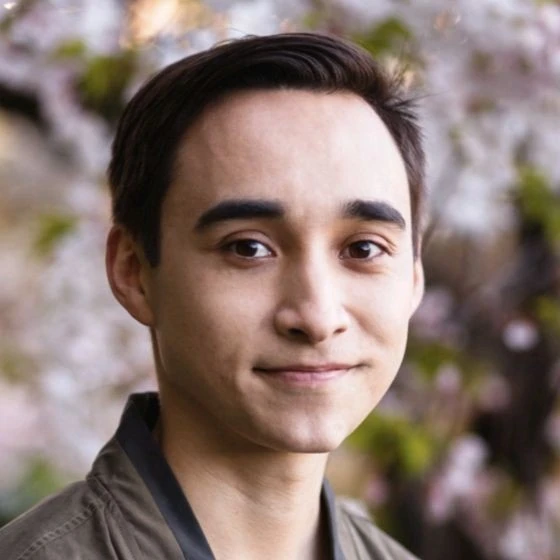
Evan Hatch
Board Member
Evan Hatch is Managing Director at Center for Emergence, a nonprofit researching the intersection of spirituality and therapeutics. Center for Emergence sponsors clinical research at institutions such as the Harvard Neurospirituality Lab (opens in new tab) and Brigham and Women's Hospital.
Evan is the founder and CEO of Worlds (opens in new tab) and an angel investor with 8+ years experience in Venture Capital
How it works
-
Gather. Articles flow in around the clock from the major scholarly indexes and preprint servers: PubMed, OpenAlex, Europe PMC, CrossRef, bioRxiv and medRxiv, and others. The fetch code only collects; nothing at this stage judges, rewrites, or ranks a paper.
-
Dedupe and filter. Every record is checked against the library first, matched by DOI and then by title, so the same paper arriving from several sources is stored exactly once. A keyword prefilter written in plain code settles most keep-or-drop decisions on its own.
-
Judge and extract. AI does exactly two jobs per paper: a relevance verdict with a stored one-line reason when a record is genuinely borderline, and, when a paper is kept, the study facts shown on its page (design, sample size, population, key points), plus a short summary used only to rank search results.
-
Never fake. Deterministic code decides everything else, including what is never invented: a paper with no abstract keeps a blank abstract, junk venue names become no venue at all, a model error never hides an article, and author lists are verified against CrossRef's registered records.
-
Humans in the loop. Everything the pipeline flags gets human review: flagged articles wait in a moderation queue where a person vets the model's verdict and restores or removes the paper, with an audit trail either way. Nothing is ever deleted by a machine.
One more model call exists, and it runs only when someone asks: the synthesis tool answers a research question from a fixed set of studies chosen by code, and a validation pass drops any citation the model did not actually receive. The same engine writes each topic's state of the evidence and the monthly recaps.
Retractions and corrections. We check the papers we index against CrossRef's retraction and update records and PubPeer, badge affected articles, and list them on the retractions page.
How the library is built, in full → See how an article flows through the pipeline, step by step →
What we are not
- Not medical advice. The library describes what studies found, not what you should do, and nothing here replaces a conversation with a clinician.
- Not advocacy. Study facts and syntheses keep the direction of the results, including null and negative findings, and how we use AI is written down in our AI policy.
- Not a store. Every article links to its source, reading is free, and there is no paywall between you and the paper.
How to help
- We run on donations. The Consciousness Library is a non-profit. There are no ads, no investors, and no paywall: hosting, the data pipelines, and the software infrastructure behind every article page and synthesis are paid for entirely by readers.
- Share what you find. Every synthesis, recap, and paper has a copy-link button. Sending one good result to one curious person is how this library grows.
- Use it, and stick around. A free account lets you follow topics, save searches for the weekly digest, bookmark papers, generate your own syntheses, and join the community discussions.
- Tell us what is broken or missing. Bug reports, missing papers, wrong study facts, feature ideas: get in touch. Skeptical readers make this better.
Questions
Where does the research come from?
What does the AI write?
Can I trust the study facts and syntheses?
Is it free?
How do I follow a topic?
Citing and contact
- Citing papers. Cite the paper itself: every article page has one-click APA and BibTeX exports that point to the original publication.
- Citing syntheses and recaps. Every synthesis and recap has a Cite button that copies a ready-made attributed citation: The Consciousness Library as the source, the date it was generated, the number of studies it drew on, and a permanent link back to that exact result. The underlying studies have their own one-click citation list right beside it.
- Press and researchers. For inquiries, or anything else, get in touch.